If you were a baseball fan in the 1990s, you probably remember the last work stoppage that nearly ruined the game.
For the first time in baseball history, the World Series was canceled. The Montreal Expos were on the verge of becoming one of the most exciting teams in baseball before the work stoppage began a downward spiral that eventually ended with the franchise moving to Washington, D.C. Tony Gwynn was hitting .394, putting together one of the greatest seasons of his career, while Cal Ripken Jr. continued showing the blue-collar worker that you show up every day, no matter how hard the job becomes or how much it takes out of you.
Baseball eventually returned and began rebuilding its relationship with fans. Ripken broke Lou Gehrig’s consecutive-games streak, while Mark McGwire and Sammy Sosa revitalized the home run chase for Roger Maris’ single-season record of 61, even as the steroid era later cast a shadow over their accomplishments.
Yes, baseball was back as America’s national pastime, and all seemed right again. There were a few hiccups along the way, but nothing that erased an entire postseason or threatened the sport’s relationship with its fans quite like 1994.
Fast-forward 32 years. A new generation of owners, players and fans has emerged, but another dark cloud looms over the sport. The mighty Los Angeles Dodgers were swept out of the postseason by the Milwaukee Brewers, ending their bid for a third consecutive World Series Championship. Now, baseball faces another potentially damaging labor dispute.
As 11:59 p.m. EST on December 1 approaches, concerns about a work stoppage are growing. With the collective bargaining agreement set to expire, MLB owners are expected to lock out the players if the two sides cannot reach a new deal.
At the forefront of the dispute is the salary cap, along with concerns about escalating player salaries and long-term contracts. Owners argue that controlling payrolls is necessary to improve competitive balance and protect the financial health of the sport.
But are teams really struggling financially, or is there more to the story?
For years, fans have heard that some owners barely break even and struggle to compete with big-market teams. MLB introduced the competitive balance tax, commonly known as the luxury tax, to discourage excessive spending and help level the playing field. Yet some of the wealthiest teams have continued to spend aggressively.
This year’s postseason has offered a reminder that payroll does not guarantee success. The Milwaukee Brewers, Tampa Bay Rays and Cleveland Guardians all ranked among the bottom 12 teams in payroll, while the Dodgers were among baseball’s biggest spenders. Milwaukee swept Los Angeles out of the NLCS, and the Rays advanced over the Guardians in a thrilling ALCS, proving that a team’s financial muscle does not automatically translate into a championship.
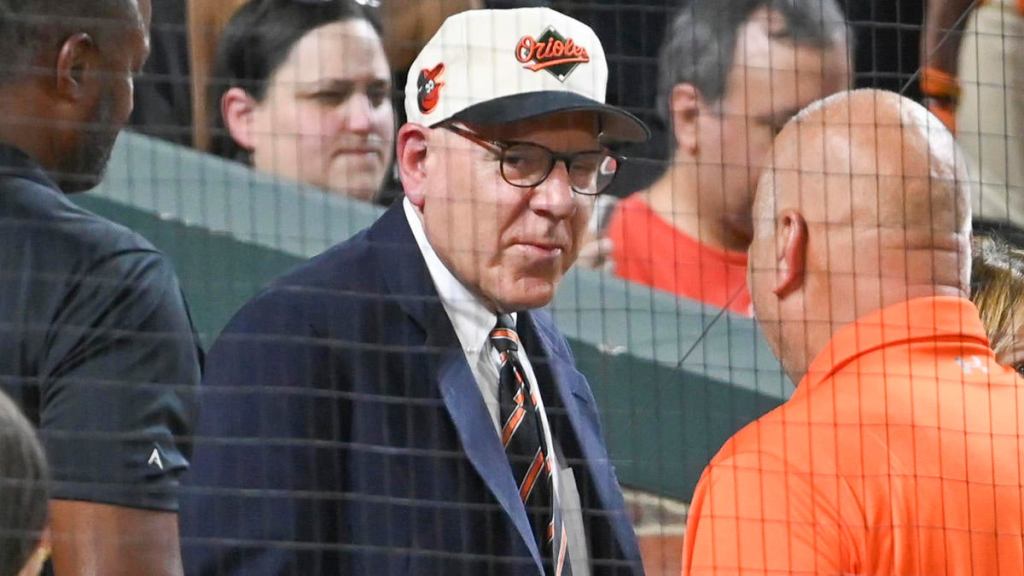
Amid the looming labor dispute, Baltimore Orioles owner David Rubenstein has made comments that could raise eyebrows throughout the league. His remarks may also complicate the argument that MLB owners need a salary cap to remain financially viable.
Speaking at a professional sports owners’ forum hosted by the Economic Club of Washington, D.C., Rubenstein offered a candid explanation of what initially attracted him to team ownership.
“A lot of my friends were buying teams, and I realized they are making money,” Rubenstein said. “They are making more money than I am making in private equity.”
He continued by explaining that his decision to purchase the Orioles was ultimately driven by a desire to give back to his hometown.
“I thought I should look at it as a financial thing, but ultimately I bought the Orioles for a philanthropic purpose,” Rubenstein said. “I grew up in Baltimore, as people know. I did not think I had done enough for Baltimore, so I bought the team to help revive the team a bit and ultimately revive Baltimore because Baltimore had some challenges.”
Considering Rubenstein’s background as a co-founder of The Carlyle Group, a global investment firm specializing in private equity and asset management, his comments are particularly striking. Here is an owner who built his fortune in the investment world acknowledging that his fellow sports team owners appeared to be making even more money.
So why have fans heard for so long that owning a baseball team is a financial struggle? Why do we continue to hear concerns about affordability and competitiveness while watching billionaires purchase franchises, sign lucrative television deals and negotiate increasingly valuable team sales?
The financial realities of owning a team are complicated. Revenue, operating expenses, debt, franchise appreciation and cash flow all play a role, and Rubenstein’s comments alone do not tell the entire story. However, they raise a fair question about how much of the push for a salary cap is genuinely about financial survival and how much is about controlling costs.
Fans do not buy tickets because they are passionate about ownership. They show up for the history, the memories, the excitement and the hope that their team will win. They invest their time and money because they want to watch their favorite players compete and see their club build something special.
Yet fans are often the ones left disappointed when owners refuse to spend, ticket and concession prices climb or labor disputes threaten to take the game away altogether.
Rubenstein has also suggested that owners care more about winning than making money, while acknowledging that they are not opposed to making a profit. That distinction matters.
There is nothing inherently wrong with a business making money, but when the league’s financial arguments become a justification for limiting player salaries, fans have every right to question whether those restrictions will actually improve the product on the field.
At the end of the day, fans are the lifeblood of baseball. Without them buying tickets, watching games, purchasing merchandise and passing their love of the sport to the next generation, the value of these franchises would mean very little.
The players and owners may disagree about how the billions of dollars generated by baseball should be divided, but neither side should forget who makes the entire operation possible.
We have seen what happens when labor disputes take baseball away from its fans. The 1994 strike left a lasting scar on the sport, and it took years for baseball to fully recover its footing. Now, with another work stoppage on the horizon, the question is simple: At what point will owners and players realize that without the fans, their fortunes could look very different?
When baseball’s wealthiest argue over billions of dollars, it is the fans who risk paying the price.
What are your thoughts on the impending lockout? Let us know in the comments below! Make sure to follow The Baltimore Battery on Facebook, X, Bluesky and TikTok, and use the hashtag #baltimorebattery when sharing our content!
Represent The Baltimore Battery and show off your fandom with our official merchandise! Reasonably-priced attire made just for you! Visit our official shop site by clicking here!
Like Stephen’s content? Follow him on X – @SRJHeckman, and listen to the official podcast of The Baltimore Battery, The Final Strike, anywhere you get your podcasts!


Leave a Reply