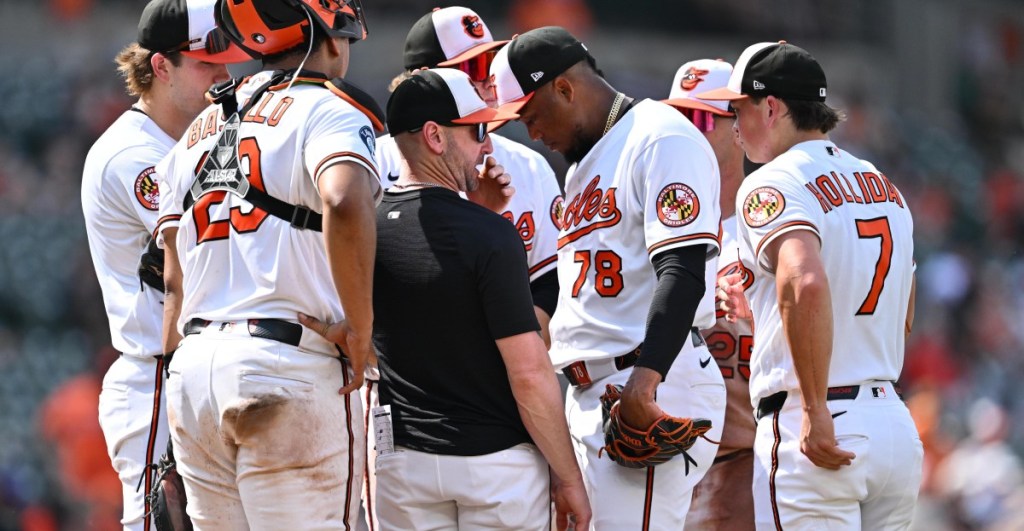
Earlier this season, we evaluated the Baltimore Orioles and handed out a report card that was far from glowing.
At the time, the Birds had failed to live up to their lofty expectations and managed to scrape together a D grade for the first half of the season.
The Orioles ultimately finished fourth in the AL East with a 79-82 record. They were not eliminated from playoff contention until the final days of the season, and that record looks considerably better than many in Birdland expected given how poorly the team started.
With the season complete, we are back to hand out the Orioles’ final grades and examine where they improved and where they fell short. There was plenty of room for improvement after the first few months, so hopefully, we will find more progress than regression.
Let’s jump right in and see where the Baltimore Orioles ended the season with our 2026 season report card.
OFFENSE: Previous ~ D- / Final ~ C-
The Orioles improved slightly in this category, largely thanks to Pete Alonso and his impact on the lineup. The Polar Bear became the first player in MLB history to lead both leagues in RBIs, and he delivered in several clutch situations throughout the season.
Coby Mayo emerged as a surprising offensive catalyst with increased playing time, and Christian Encarnacion-Strand provided an unexpected boost after being called up to the majors after Blaze Alexander missed significant time. Together, they helped keep the Orioles’ offense fighting during the final months of the season.
While the offense ranked in the middle of the pack or near the bottom in most major offensive categories, the Orioles finished in the top 10 in home runs and the top five in both walks and strikeouts.
Health remains a major question mark. A full season from Jordan Westburg and Jackson Holliday could make a significant difference. Gunnar Henderson also appeared to be hampered by an injury, further limiting the lineup’s potential.
If the Orioles can finally get the entire roster healthy and on the field together, this offense could be much better. After the last couple of seasons, however, that remains a big if.
DEFENSE: Previous ~ F / Final ~ F
There was not much improvement defensively, although the team appeared to play better in the second half than it did early in the season.
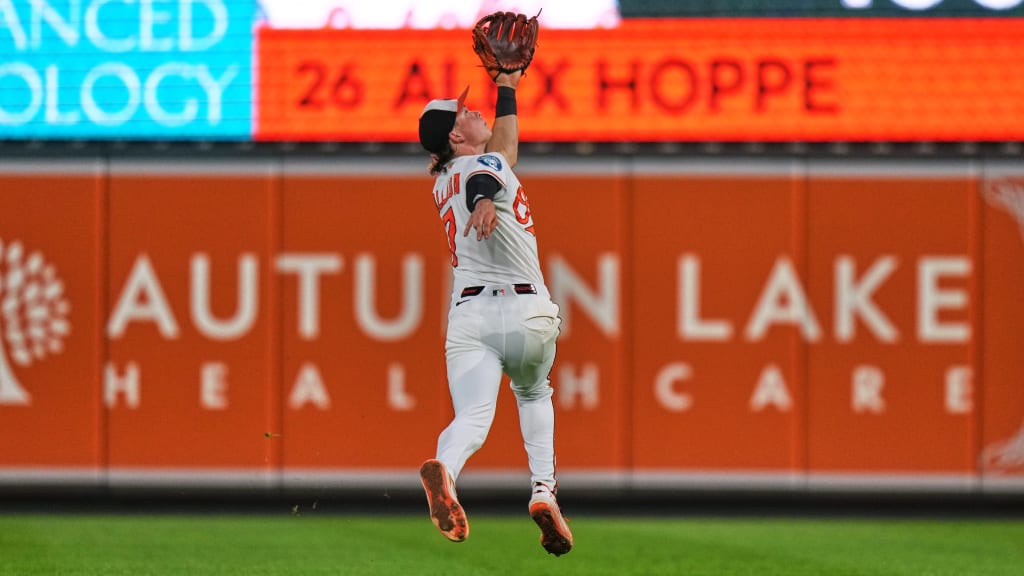
The problem is that the Orioles still allowed the most unearned runs, committed the seventh-most errors and ranked near the bottom of the league in fielding percentage.
Defensive miscues cost the Birds games and contributed to blown leads. With some stellar performances from the pitching staff and stretches when the offense failed to show up, those unearned runs became even more glaring.
Led by Gunnar Henderson’s 18 errors, more than twice his total from last season, and Jeremiah Jackson’s 10, the Orioles continued to struggle in the field. The team finished with a .983 fielding percentage and 96 errors, making for one of the worst defensive showings in franchise history.
Until the Orioles can clean up their defensive fundamentals, this unit will continue to be a major concern.
STARTING PITCHING: Previous ~ Incomplete / Final ~ C+
To begin the season, the starting rotation was one of the biggest question marks on the roster. The year opened with injuries to Chris Bassitt, Trevor Rogers and Dean Kremer, while Zach Eflin was lost for the season after just one start.
On top of that, Kyle Bradish was beginning his first full season since 2023, and Shane Baz was entering his second year removed from shoulder surgery. With so much uncertainty and so many missed games, the rotation initially received an incomplete grade.
Amazingly, starting pitching became one of the strongest areas of the team by the time the season ended.
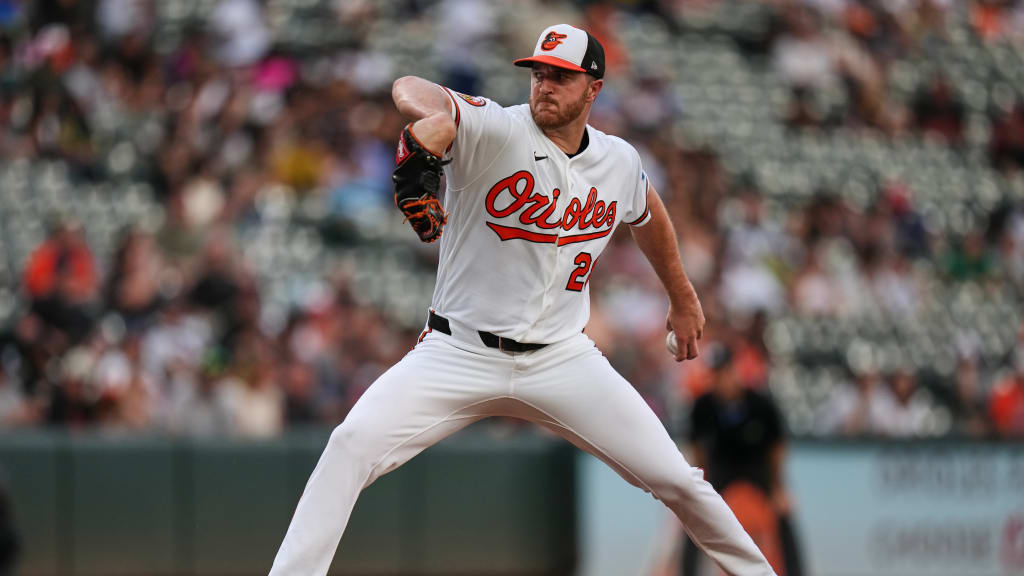
The Orioles recorded 62 quality starts, tying for sixth in the league, while their 4.08 rotation ERA ranked 12th. They also lost 15 games in which starters recorded a quality start, highlighting how often the team failed to provide enough support despite strong outings.
Three O’s starters won at least nine games: Trevor Rogers, Brandon Young and Chris Bassitt. Young enjoyed a breakout campaign, finishing with a 9-6 record and a 3.56 ERA. The Orioles received strong fill-in performances from Cade Povich, Trey Gibson at different points.
The Orioles now have a strong foundation to build around. Kyle Bradish, Brandon Young and Shane Baz give the team a promising front-half, with the possibility of Trevor Rogers re-signing with the Birds long-term.
BULLPEN: Previous ~ D+ / Final ~ C
The bullpen was a roller coaster of epic proportions, turning the relief corps into one of the Orioles’ biggest weaknesses by mid-season and then one of its biggest strengths by season’s end.
It started with Ryan Helsley, who was signed to help fill the void left by Félix Bautista as he recovered from offseason shoulder surgery. Helsley appeared in just 17 games all season, finishing 0-4 with eight saves in nine opportunities across 15.1 innings.
Keegan Akin and Colin Selby were lost for the season, Andrew Kittredge began the year on the injured list and the pen’s lone early-season bright spot, Rico Garcia, turned into a home-run-throwing late-inning liability.
The Orioles finished in the top 10 in relief appearances with 541, but they also blew 22 leads and converted just 68% of save opportunities.
But then came the month of June. From June 1 on, the Orioles had the third-best bullpen ERA in baseball with a 3.23. It was a complete turnaround from a disastrous May in which the pen pitched to a 5.10 ERA and 156 runs given up.
Fans got to see prospects Luis De León and Cameron Foster showcase some of their potential. Yennier Cano had a bounce-back campaign that earned him a two-year extension, and we saw the return of The Mountain late in September.
Our final grade came down to a lack of defined roles, insufficient depth and injuries to multiple top-end pieces. If the Orioles want to contend in 2027, retooling the bullpen must be a priority.
MANAGING: Previous ~ C- / Final ~ C
Many people will see these two grades and raise an eyebrow, but hear us out and consider the circumstances.
The Orioles dug themselves into a deep hole early in the season. Looking back, we were probably too lenient with the initial grade because Craig Albernaz was still learning his team, and that showed, particularly on defense.
Alby eventually began making changes, taking a different approach to defensive fundamentals. The improvement was not dramatic, but the Orioles went from one of the league’s worst defensive teams to the seventh-worst.
They also became more aggressive on the basepaths in the second half, leaned on Pete Alonso as an on-field leader and finally began having some fun again.
At one point, the Orioles looked left for dead and nowhere close to being postseason contenders. Yet they remained in the race until the final days of the season and finished strong after eliminating the Toronto Blue Jays from October and avoiding the bottom of the AL East barrel.
There are still plenty of areas that need improvement, especially when it comes to dealing with the media, but Albernaz managed his best baseball during the final two months. He still has work to do with bullpen management, and there were times when he appeared to lean too heavily on analytics rather than responding to the situation in front of him.
After his first season at the helm, Albernaz earns an average grade. The Orioles missed the postseason, finished with a 79-82 record and played better baseball down the stretch.
OVERALL TEAM GRADE: Previous ~ D / Final ~ C-
This easily could have been a D+, but certain contributors from the O’s lineup and the starting rotation helped push the Orioles just above the D range.
Pete Alonso provided a major offensive presence, leadership and steady production. Coby Mayo showed that he can handle big-league pitching. CES and Blaze Alexander proved to be a strong offensive acquisitions.
Meanwhile, the starting rotation recorded 62 quality starts, even though the Orioles lost 15 games in which their starters earned one. Chris Bassitt provided exactly what the team needed when healthy, and Shane Baz showed that he has the stuff to form a formidable one-two punch with Kyle Bradish.
However, despite ranking among the top five in walks, the Orioles finished among the league’s top four in strikeouts. Far too often, they left runners stranded while watching a third strike sail right down the middle of the plate.
Fundamental baseball must become a priority if this coaching staff wants to build a sustainable winner. Health is another concern, particularly for players such as Westburg and Holliday, whose young careers have yet to reach the level many expected.
There were simply too many shortcomings for this team to earn a higher grade. Finishing with a borderline passing mark is nothing to celebrate after a season that began with such high expectations.
Before the 2027 season begins, changes will be necessary. Some players must take the next step in their development, while the organization needs to address its weaknesses and improve the overall quality of its play and managerial decision-making.
With the 2026 season behind them, the Orioles can now turn their attention to preparing for 2027, assuming baseball makes it that far with the impending lockout.
What are your thoughts? Do you agree with our grades? What grades would you give the Orioles, and what would you have done differently? Let us know in the comments below! Make sure to follow The Baltimore Battery on Facebook, X, Bluesky and TikTok, and use the hashtag #baltimorebattery when sharing our content!
Represent The Baltimore Battery and show off your fandom with our official merchandise! Reasonably-priced attire made just for you! Visit our official shop site by clicking here!
Like Stephen’s content? Follow him on X – @SRJHeckman, and listen to the official podcast of The Baltimore Battery, The Final Strike, anywhere you get your podcasts!


Leave a Reply