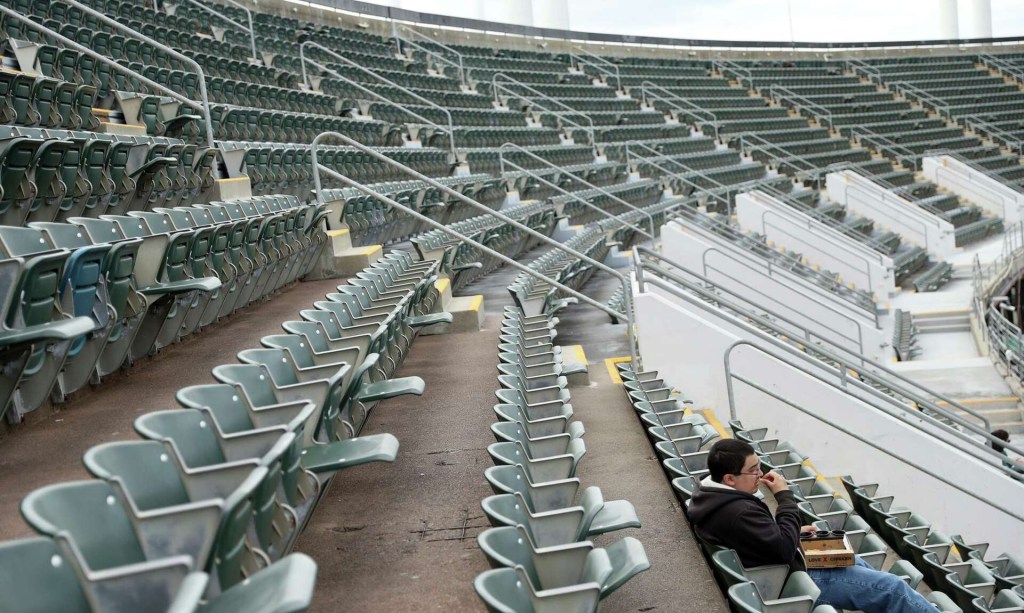

As baseball’s global popularity continues to grow, the sport also faces a looming risk: how much it could lose if a lockout arrives when the current collective bargaining agreement expires in December.
The game has reached heights that once felt unimaginable. From sandlots where kids organize pickup games to a global stage where entire nations gather to watch the world’s best compete, baseball has expanded well beyond its traditional borders. What was once considered a regional pastime has become an international showcase.
The World Baseball Classic, held every four years, has evolved into one of the sport’s most anticipated events. The Caribbean Series, Little League World Series, Nippon Professional Baseball, the Korean Baseball Organization, the Dominican Winter League and countless others now command global audiences, with fans tuning in at all hours. Baseball is no longer confined to North America.
A labor stoppage would unquestionably disrupt the sport in the United States, but its ripple effects would be felt far beyond MLB. International leagues, players and fans would all experience the aftershocks of a lockout.
Commissioner Rob Manfred has downplayed the likelihood of an impasse, suggesting that the issues facing the league are manageable.
“I do think there has been a rush to negativity by a lot of the media that covers our sport,” Manfred said. “We have not even started the process. I think we have to wait and see how things unfold at the table.”
Still, several issues carry more weight in this round of negotiations than they have in the past. One traces back to the 1994 strike and the 2021–’22 lockout. Two others are newer, and together they could determine whether the league avoids — or walks directly into — another work stoppage.
On the surface, the usual CBA topics remain: expansion, on-field rule changes, the international draft, qualifying offers, earlier pay for young players and payroll disparities. These are familiar debates, revisited in multiple bargaining cycles.
What feels different now is the growing conversation around a salary cap and/or floor.
As teams like the New York Mets and Los Angeles Dodgers continue to spend at historic levels, calls for a cap/floor have grown louder. Even New York Yankees owner Hal Steinbrenner has publicly acknowledged the issue.
“I would consider supporting a cap, only if it is accompanied by a floor,” Steinbrenner said during a video call with reporters before the 2026 MLB Winter Meetings, noting that any such system would need balance.
When the owner one of the franchises responsible for the luxury tax’s existence begins openly discussing a cap, it underscores the scale of baseball’s spending problem. A cap without a floor would only entrench inequities, but a floor could force low-spending teams to reinvest in competitiveness and help restore balance across the league.
While the players union may eventually entertain discussions around a cap-and-floor structure, that issue alone would not define negotiations. Instead, it would likely become the flashpoint — the final ingredient that intensifies already tense talks between ownership and the Major League Baseball Players Association.
Owners may push for a sweeping overhaul of baseball’s economic system, potentially including a cap or floor. The union, however, has made clear it would not entertain such a proposal, setting the stage for conflict before formal negotiations even begin.
Complicating matters further is a lesser-known issue: the MLBPA and executive director Tony Clark are reportedly under federal investigation related to union finances. If that inquiry escalates, it could affect union leadership and weaken the MLBPA’s leverage at the bargaining table.
Ultimately, the question is what each side is willing to concede and where common ground exists. MLB remains the only major North American professional league without a formal salary cap, and that distinction has become a growing source of tension.
The Dodgers, operating within the rules of the current CBA, illustrate the imbalance better than any team. Their recent contracts include:
- Shohei Ohtani: 10 years, $700 million ($680 million deferred)
- Kyle Tucker: 4 years, $240 million ($30 million deferred)
- Yoshinobu Yamamoto: 12 years, $325 million
- Mookie Betts: 12 years, $365 million
- Blake Snell: 5 years, $182 million
Those deals alone total nearly $1.8 billion in commitments between 2021 and 2026 — a figure that exceeds the $1.725 billion sale price of the Baltimore Orioles in 2024. The disparity is difficult to ignore.
Between massive media markets and lucrative regional sports networks, nearly half the league struggles to keep pace. Competitive balance remains elusive, and each offseason brings renewed calls for reform.
Informal meetings took place between the two sides last fall, but they yielded little progress. As of now, no formal negotiations have begun, though talks typically ramp up once spring training starts. This remains a situation worth closely monitoring.
If — or when — a lockout occurs, free agency and trades would immediately freeze. There would be a narrow window into early-to-mid March 2027 to finalize an agreement before regular season games are threatened.
History offers a cautionary tale. The last work stoppage that cost games took nearly a decade for the sport to recover in the eyes of fans. Another lost season could inflict damage far more difficult to repair.
While it is possible this looming crisis never materializes, the risk is real. The 2026 season could represent not just another high point for the game but potentially the last uninterrupted one for some time.
For fans, the questions are unavoidable. Should baseball implement a salary cap and/or floor? Should revenue sharing be tied directly to player spending? Should stricter penalties exist for gambling violations?
The 2026 season is shaping up to be one of the most compelling in recent memory — remembered either for its brilliance on the field or for the uncertainty that followed.
Time will tell. But if labor unrest returns, it will not be owners or players who suffer most. As history has shown, it is the fans who pay the price, with little say in how the game they love is shaped.
What are your thoughts? Let us know in the comments below! Make sure to follow The Baltimore Battery on Facebook, X, Bluesky and TikTok, and use the hashtag #baltimorebattery when sharing our content!
Represent The Baltimore Battery and show off your fandom with our official merchandise! Reasonably-priced attire made just for you! Visit our official shop site by clicking here!
Like Stephen’s content? Follow him on X – @SRJHeckman, and listen to the official podcast of The Baltimore Battery, The Final Strike, anywhere you get your podcasts!

 THE BALTIMORE BATTERY
Leave a comment