


The Baltimore Orioles’ offseason got off to a great start with the managerial hiring of well-respected former Cleveland Guardians bench coach Craig Albernaz, but president of baseball operations and acting-GM Mike Elias still has a sizable workload ahead.
Baltimore regressed from 91 to 75 wins in 2025, and a large part of that was due to its 4.60 team ERA, ranking 26th in Major League Baseball. That makes the to-do list pretty simple for the O’s front office: PITCHING, PITCHING and more PITCHING.
With that being said, here are five free agent starting pitchers we fully expect the Orioles to look into this winter.
FRAMBER VALDEZ

Framber Valdez is set to be the big fish on the market this offseason, and we expect the Orioles to be one of the many teams in contact with the crafty left-hander.
It was a tale of two seasons for the Houston Astros’ ace, who posted a 2.75 ERA in the first half and a 5.20 ERA in the second half, which ballooned all the way to 6.51 ERA in September. Overall, Valdez finished his season making 31 starts to the tune of a 3.66 ERA, his highest mark since 2019.
Spotrac currently has Valdez’s market value set at 6 years, $199.9 million ($33.32M AAV).
That is obviously a lot of money for a guy coming off his worst season in five years, but here are a few reasons why Valdez could be worth it.
Durability: Valdez is as durable as they come, making 30+ starts in three of his last four seasons. With the Orioles’ rotation being decimated with injuries the last two seasons, we expect durability to be something they value heavily going forward.
Ground-ball Wizard: Even in a down year, some things never change. Valdez posted a 59.4% GB rate, which sat in the 97th percentile in 2025. For his career, Valdez’s GB rate gets even better, sitting at 61.8%. Camden Yards’ home run factor of 105 is eighth highest in Major League Baseball, so anytime a guy can keep the ball on the ground is a plus.
Sustained Dominance: No starter in this free agent class has the track record of Valdez. A career ERA of 3.36 and three top 10 Cy Young finishes speak for themselves. Establishing himself as one of the best starting pitchers in the league for the last half decade, Valdez is as consistent as they come.
Like every pitcher, however, Valdez has some red flags that definitely make his nearly $200 million price tag ring some alarm bells.
Hard Contact: Despite his success year after year, Valdez struggles to avoid hard contact. From 2019-2025, he has never had a hard-hit rate under 40% and has never finished above the 18th percentile. While his ability to keep the ball on the ground can often mitigate the risks, teams would prefer their $200 million arm to be inducing softer contact.
K rate/BB rate Trends: This one may be nitpicking, but we do think there is merit to it. Over the last three years, Valdez’s K rates were as follows: 24.8%, 24.0%, 23.3%. In those same seasons, his BB rates were 7.1%, 7.8%, 8.5%. This one is more of a wait and see situation, but with the rough second half for Valdez, it is possible regression is starting to kick in for the soon-to-be 32-year-old.
Character Concerns: Again, this one is not a fact. We will not act like we know the guy personally, but the entire baseball community witnessed Valdez cross up his own catcher while in the midst of a rough start against the New York Yankees, throwing a fastball when a curveball was called and hitting his battery mate in the chest. Sure, it may have just been a tough moment. However, the incident will rub some organizations the wrong way.
DYLAN CEASE: (UPDATE: SIGNED BY TORONTO – 7 YEARS, $210 MILLION)
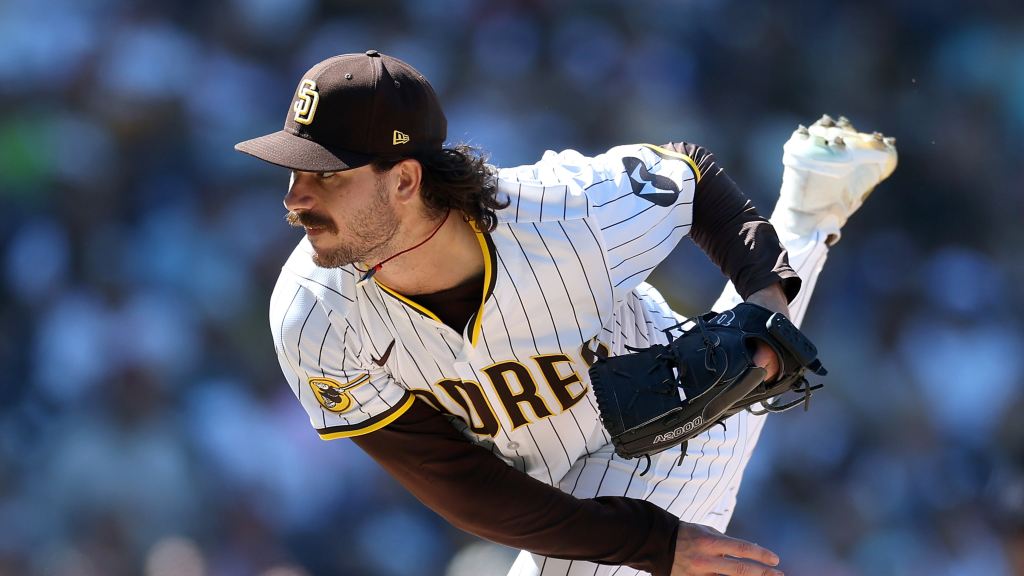
One of the biggest names on the starting pitching market, San Diego Padres right-hander Dylan Cease, is another option we expect the Orioles to kick tires on and potentially go after.
Much like Valdez, 2025 was not the ideal contract year for Cease. In his 32 starts with the Padres, the Milton, GA, native pitched to a 4.55 ERA with 215 strikeouts in 168 innings pitched.
Despite the tough season for Cease, Spotrac still has his market value at 7 years, $185 million ($26.42M AAV).
Once again, that is a pretty penny for an pitcher coming off an ERA north of four, but here’s why Cease could be worth it.
Misfortune: While the peripherals look bad, Cease’s underlying metrics still suggest he is a great pitcher. Cease posted a FIP of 3.46, an xFIP of 3.56 and a SIERA of 3.58, all of which are roughly a full run lower then his actual ERA. While a high BABIP doesn’t inherently suggest bad luck, the .320 mark Cease posted in 2025 will almost certainly go down.
K Rate: Cease also boasts one of the best strikeout rates in Major League Baseball. At 29.8%, Cease was in the 89th percentile in 2025, and for his career, he has a 28.6% K rate and a 10.91 K/9, making him truly one of the best swing-and-miss pitchers in the sport.
Durability: Cease, like Valdez, is one of the most durable pitchers in the game. He has made at least 30 starts in every season since 2021 and just topped the 160 innings mark for the fifth consecutive season. Even with his mixed results, Cease would provide Baltimore with a true workhorse, which it could certainly use.
The floor of Dylan Cease is extremely high, but even with his strong advanced metrics, there are some holes in his game.
Walks: One of the worst things you can do as a starter is make your life harder than it has to be. Unfortunately, Cease is no stranger to that. Last season, the 29-year-old pitched to a 1.33 WHIP, largely because of his 9.8% BB rate, which was actually a tick better than his 10% career average. With strikeouts and walks being such common outcomes for Cease, it has led to a lot of inefficient starts, requiring more outs from his bullpen.
Home Runs: Another drawback from Cease is his inability to keep the ball in the park. His 1.13 HR/9 is around league average, but higher than a team would want from its $180 million pitcher. It is especially concerning when you factor in his BB rate, which turns his long balls into two and three-run homers instead of solo shots.
MICHAEL KING (UPDATE: SIGNED BY SAN DIEGO – 3 YEARS, $75 MILLION)
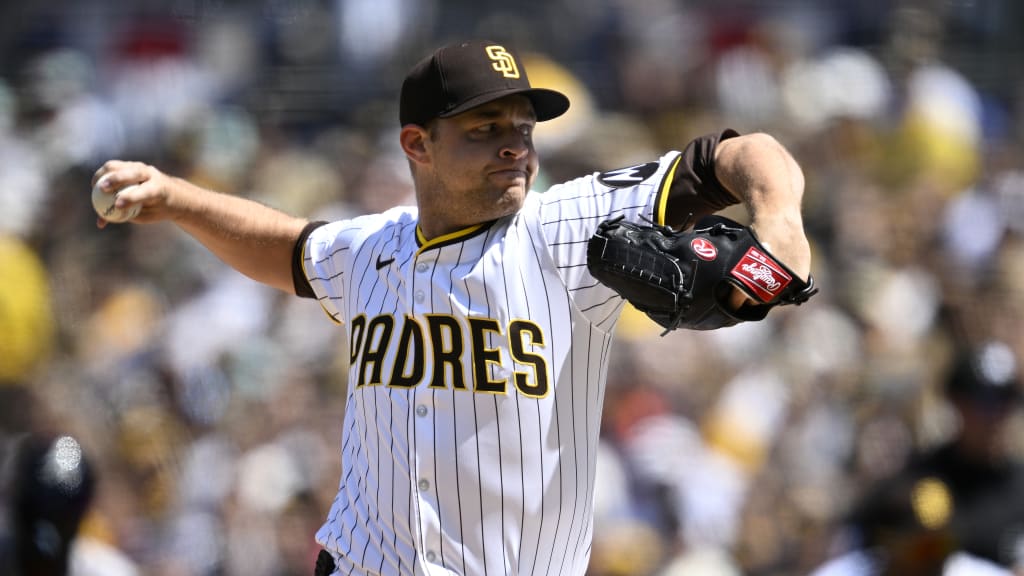
Michael King may not be the biggest name on the market, but he might just be the most fun option for the Orioles to explore.
It is tough to evaluate King’s 2025 season, since injuries limited him to just 15 starts. Even when healthy, it was far from King’s best season, but he still managed to post a 3.44 ERA in his down year. His 2024 campaign is what really stands out with King, who in his first year as a starter made 31 starts to the tune of a 2.95 ERA with a 27.7% K rate.
On the open market, Spotrac projects King to fetch a 4-year, $91.9 million deal ($22.98M AAV).
King has the highest ceiling of any starter available this offseason, so anything less than $100 million would be a home run for the O’s. Here are a few reasons why the Birds should be in on King.
K Rate: Just like his former teammate Dylan Cease, King is rounding into one of the better strikeout pitchers in Major League Baseball. His 24.7% K rate in 2025 is not eye-popping, but his injury-riddled season contributed to that. His 2023 29.5% K rate (88th percentile) and 2024 27.7% K rate (81st percentile) is closer to who he really is.
Run Prevention: Obviously, any good starter is going to be able to limit runs, King does not get the credit he deserves for what he has accomplished in his young career thus far. In 494.2 career innings pitched, King has a 3.24 ERA. This includes a three-year stretch from 2022-2024 where he sustained a sub-three ERA across 114 appearances. If you are into the advanced metrics, King also boasts a career FIP of 3.50, xFIP of 3.65 and SIERA of 3.62, confirming his success is sustainable.
Soft Contact: We have already established that King strikes out a lot of batters, but even the ones he does not, he has been fantastic at generating soft contact. Here are the average exit velocities that King has allowed over the last three seasons: 2023 – 86.8 mph (88th percentile), 2024 – 85.7 mph (99th percentile), 2025 – 87.8 mph (84th percentile).
Even on a bargain of a contract, there are a few potential concerns with King going forward.
Injuries: Unlike Cease and Valdez, the durability of King is very much in question. King missed 57 games in 2021 due to a finger injury, missed the second half of 2022 due to a fractured elbow that required surgery and missed almost all of 2025 with shoulder and knee injuries. With him having only one full season as a true starter, teams will definitely question his ability to handle such a workload.
Walks: This is really the only other concern with King, but it is definitely worth noting. King has a career BB rate of 8.3%, a BB/9 of 3.13 and his best BB rate of his career was in just the 65th percentile. In 2024, he was in the 39th percentile in BB%, followed up with the 41st percentile BB% in 2025.
RANGER SUÁREZ
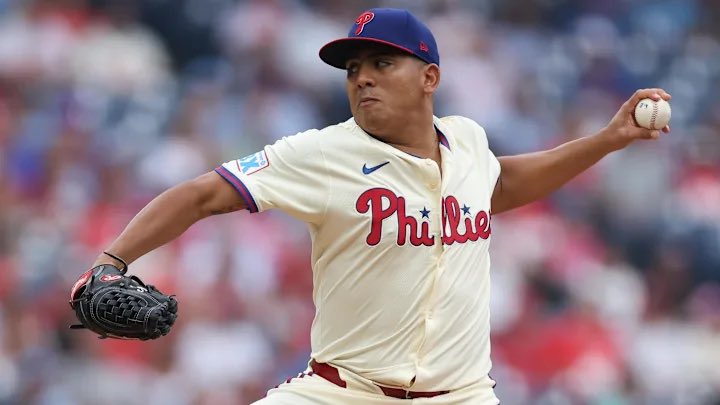
Ranger Suárez is another left-handed pitching option the Orioles will have available to them. Framber Valdez is going to get most of the attention, and rightfully so, but he and Suárez are not all that different.
Suárez doesn’t have the track record of Valdez, but he was quietly much better in 2025. Making 26 starts, Suárez pitched to a 3.20 ERA, helping the Philadelphia Phillies win their second straight NL East title.
Spotrac currently projects that Suárez will land a 6-year, $161.6 million ($26.93M AAV) contract. That is quite a sum of money for Suárez, but his 2025 proved that he can be worth it.
Ground-ball Machine: We were not lying when we said that Suárez and Valdez are very similar. Suárez has been elite at generating ground balls his entire career, as suggested by his 52% GB rate. We did not mention this with Valdez, but the Orioles should be especially valuing ground-ball pitchers, with the likes of Fenway Park and Yankee Stadium being in the division and very hitter-friendly.
Efficiency: Suárez is as efficient as they come. Not only did he average over six innings pitched per start, but 17 of his 26 starts were quality starts (six+ innings pitched / three or less earned runs). While he’s not at all flashy, that is still valuable production, especially for a team like Baltimore that really struggled to produce quality starts last season.
Soft Contact: Suárez is another master at evading hard contact. Over the last four seasons, here are his average exit velocities allowed: 2022 – 87.5 mph (73rd percentile), 2023 – 87.8 mph (75th percentile), 2024 – 86.9 mph (89th percentile), 2025 – 86.5 mph (95th percentile).
Suárez has truly mastered the art of pitching. However, we do think there is one glaring red flag that makes $160 million a hard pill to swallow.
Concerning Season Splits: For whatever reason, Suárez now has a three-year trend of not being the same pitcher he was in the first half of the season: 2023 – 1st half: 3.77 ERA, 2nd half: 4.57 ERA, 2024 – 1st half: 2.76 ERA, 2nd half: 5.65 ERA, 2025 – 1st half: 2.25 ERA, 2nd half: 4.40 ERA.
CHRIS BASSITT
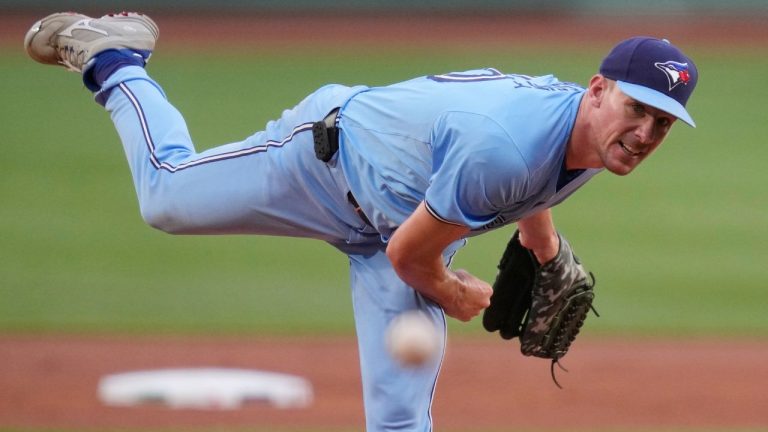
In a free agent market loaded with big names, Chris Bassitt is going to find himself as the perfect consolation prize to a lot of clubs hopeful to contend in 2026, and we expect the Orioles to be one of the many teams interested in his services.
Spotrac projects Bassitt’s market value to be right around 2 years, $31.1 million ($15.55M AAV), which is a price Mike Elias could find more attractive.
Bassitt is one of the more low-risk, high-reward players in the free agent class, but here is why we expect his market to be busy.
Innings Eater: Bassitt is one of those pitchers every manager would love to have on their staff. Over the last five seasons, he has put together some remarkable consistency: 2021: 157.1 IP/3.15 ERA, 2022: 181.2 IP/3.42 ERA, 2023: 200 IP/3.60 ERA, 2024: 171 IP/4.16 ERA, 2025: 170.1 IP/3.96 ERA. An immense amount of value for less than $16 million per year.
Veteran Presence: Bassitt is heading into his 12th MLB season, the most of anyone on this list. The last few postseasons have proved veteran leadership is an integral part of finding success in October, and Bassitt, who has experience making both playoff starts and relief appearances, would be perfect for a young Orioles team that has seemed to unravel the last year and a half.
While we do see Bassitt as a great value signing, there are reasons his projected contract is not lucrative.
Age: Approaching 37 years old, Bassitt would be nothing more than a band-aid for a deep wound the Orioles have in their rotation. If we had to guess, Bassitt has two more serviceable years left as a major leaguer, and while he would still be a big boost for the O’s, the front office should have far more interest in a front-line starter and view Bassitt as a depth signing to complement a bigger splash.
Which starting pitchers are you hoping join the O’s rotation? Let us know in the comments below! Make sure to follow The Baltimore Battery on Facebook, X, Bluesky and TikTok, and use the hashtag #baltimorebattery when sharing our content!
Represent The Baltimore Battery and show off your fandom with our official merchandise! Reasonably-priced attire made just for you! Visit our official shop site by clicking here!

Like RJ’s content? Follow him on X – @blaw690



 THE BALTIMORE BATTERY
Leave a comment