
Today, March 8, 2024, marks the 113th International Women’s Day, a day to celebrate the accomplishments of women and acknowledge the work yet to be done to make a more equitable world for all genders.
The month of March is also Women’s History, a time for encouraging the study, observance and celebration of the vital role of women in American history.
In 2024, Major League Baseball is doing its best to incorporate women in not only the game we love but also in every sport around the globe. Steps have been made, but there’s still a lot of space to grow.
Let’s review the current state of the game when it comes to female involvement, how far we’ve come as an industry and how we can continue to improve and better the status of women in the game.
Where We’re At
The baseball community’s commitment to becoming a more inclusive space for women is becoming more and more apparent in recent years.
Major League Baseball experienced a big women’s hiring boom beginning in 2019, most notably the hiring of Alyssa Nakken to the San Francisco Giants, making her the first permanent female Major League coach (Justine Siegal guest-coached for the Oakland A’s and was first base coach for the Brockton Rox), as well as the hiring of Kim Ng as the general manager of the Miami Marlins, becoming the first woman in this role as well.
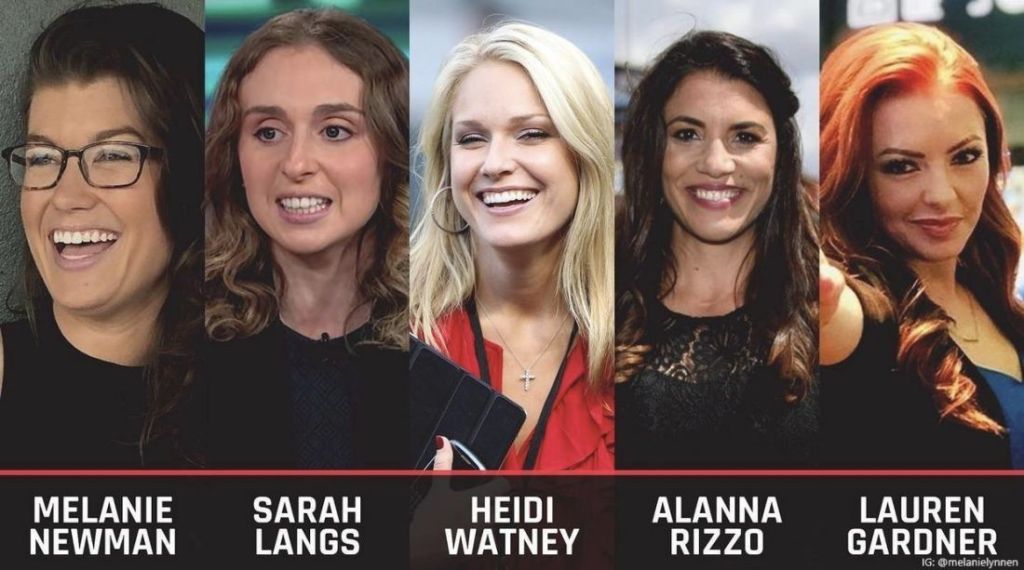
On July 20, 2021, YouTube hosted the first ever all-female MLB broadcast, as the Baltimore Orioles were narrowly defeated by the Tampa Bay Rays. The O’s own Melanie Newman served as the play-by-play announcer alongside Sarah Langs and Alanna Rizzo.
In 2024, Jen Pawol was named the first female in MLB to umpire spring training games since Ria Cortesio in 2007, and Jenny Cavnar was named the first female lead play-by-play announcer in MLB history for the Oakland A’s.
But it wouldn’t be a true celebration of International Women’s Day without recognizing the women that paved the way in Major League Baseball, as well as the work yet to be done.
Where We’ve Come From
Women have participated in professional baseball as early as the 1800s.
In 1898, Lizzie Arlington pitched an inning for the Reading Coal Heavers. In 1922, Lizzie Murphy, otherwise known as the “Queen of Baseball,” pitched an exhibition game against the Boston Red Sox at Fenway Park. The first female scout, Edith Houghton, was hired by the Philadelphia Phillies in 1946.
The advent of World War II saw over 500 MLB players both temporarily and permanently lost to the draft. Looking to fill the void of America’s favorite pastime and distract from the war, the All-American Girls Professional Baseball League was formed in 1943 and operated for the next 11 years. The 1992 award-winning movie A League of Their Own is famously based on the APL.
Birdland may be familiar with Janet Marie Smith, the architect who designed the iconic Oriole Park at Camden Yards, now considered the gold standard of ballparks. Smith has additionally worked on Fenway Park, Dodger Stadium and Olympic Stadium. The National Baseball Hall of Fame has lauded Smith’s ballpark designs for “chang[ing] the landscape of the game.”
In 2006, Effa Manley became the first woman inducted into the National Baseball Hall of Fame. Manley was the co-owner of the Newark Eagles from 1935-1948, and during her tenure, she led the team to win the 1946 Negro World Series. Manley was also a staunch advocate for equity for African Americans in baseball.
Where We Can Go
General interest in MLB among women remains relatively low compared to men but shows steady increases year over year. In 2023, 9% of women in the US described themselves as “avid fans” of MLB (as opposed to 36% of men), and 34% described themselves as “casual fans,”(not far off from the 39% of men who described themselves as such).
This interest trend is reflected in MLB’s hiring practices, though overall, fall short of general labor trends in the US.
In 2023, the U.S. workforce was made up of 47.3% women and 52.7% men. A recent survey from McKinsey & Company shows that in the general U.S. workforce, women make up 28% of c-suite executives, 28% of employees at the senior vice president level, 33% of the vice president level, 37% of senior managers and directors, 40% of managers and 48% of all entry level employees.
At the MLB level, in 2023, women represented 7.7% of CEOs/presidents, 23.6% of c-suite executives, 19% of vice presidents, 27.4% of senior administrators (directors, managers, assistant general managers, senior managers, general counsel, legal counsel, senior advisors and assistant vice presidents) and 29% of professional administrators (specialists, technicians, supervisors, analytics, programmers; excludes administration/traditional support staff), falling below the national average in every category.
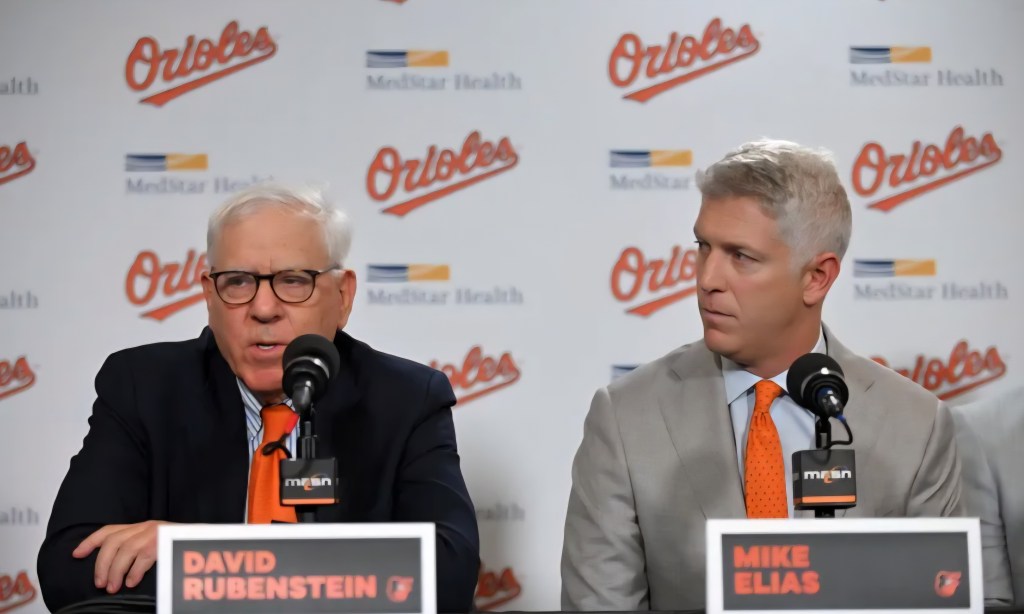
In 2024, women represent 22.6% total of all Baltimore Orioles staff. Women represent 0% CEOs/presidents, 16.7% c-suite executives, 13.3% vice presidents, 33.3% senior administrators and 20% professional administrators, falling below the national average and the 2023 MLB average in every category minus senior administrators.
Some may argue that women’s underrepresentation in MLB hiring practices compared to the national average makes sense because, as noted above, women are significantly less likely to consider themselves “avid fans” than men. As a woman, I would concede this argument if the numbers told the whole story.
However, they don’t.
According to reports verified by ESPN, women in MLB are promoted at a significantly slower rate and excluded from professional development opportunities on the basis of their gender. Women also cite increased scrutiny over their male counterparts, both in the decision room and even by ballpark security, who just simply refuse to believe a woman works for the team despite showing proper identification and credentials.
Sexual harassment, such as inappropriate touching and comments on appearance, is common and something female employees of MLB teams know they have to tolerate every day to keep their jobs.
In 2022, MLB circulated a letter among the teams that called out numerous clubs for falling “embarrassingly below” the standards for women’s facilities. Many clubs are not in compliance with MLB requirements that women staffers for both home and road teams receive a clean locker room space near the clubhouse, which is private and includes a restroom.
Many women have expressed anxiety over needing to walk through the men’s private spaces simply in order to use the restroom. One stadium was reported to not have a lock on the women’s dugout bathroom.
While this certainly paints a dire picture of the state of women in MLB, it also represents opportunity for growth.
Just this past week, MLB The Show 24 unveiled female ballplayer options in the famous video game. While this may not seem like a big step to some, it’s incredibly important for young boys and girls to grow up seeing each other represented together in the traditionally male-dominated sport. After all, women have been playing on professional baseball teams in some capacity since the 19th century.
If Jackie Mitchell could strike out both Babe Ruth and Lou Gehrig in real life, why not have the opportunity in The Show?
What are your thoughts on women in Major League Baseball on this International Women’s Day and Women’s History Month? Let us know in the comments below! Make sure to follow The Baltimore Battery on Facebook, Twitter (X) and TikTok, and use the hashtag #baltimorebattery when sharing our content!

 THE BALTIMORE BATTERY
Leave a comment