

A successful 2023 season took the spotlight for most of the Orioles’ year. The crowds at Oriole Park at Camden Yards were filling the stadium and cheering the O’s on their way to a 101-win AL East Division-winning season.
Amid all the excitement, it was announced on September 28, 2023, during a game against the Boston Red Sox (ending in their 100th victory) that the Orioles, the State of Maryland and the Maryland Stadium Authority (MSA) had a Memorandum of Anderstanding (MOA) for a lease to be finalized by December 31, 2023, the day the current lease expires, keeping the Orioles at Camden Yards for the next 30 years.
On the surface, the lease looks good for the Orioles, and fans would rest easier if it was signed and official, but the state of Maryland seems to be getting the raw end of the bargain.
The biggest takeaways are the Orioles not having to pay rent to use Orioles Park at Camden Yards in exchange for the O’s taking over routine maintenance and upgrades from the MSA. The money for improvements would come from $600 million worth of tax-payer bonds and other state revenue, deposited into a capital improvement and repair reserve fund.
On top of the $600 million, the state would also add an additional $3.3 million per year into a fund that would help pay for safety and repair projects at the ballpark. Essentially, the Orioles are in charge of maintenance, upgrades and safety, but the state will be funding the projects. The caveat is that the state has final approval and would oversee upgrades and projects not involved with routine maintenance.
Over the course of a 30-year lease, that amounts to $699 million allocated to improvements, upgrades and safety advances that the state would be shelling out from tax-payer dollars.
Now, the trade-off there usually comes in from what the state collects from the team revenues of tickets sales (7%), concessions (7.5%), net parking (50%), ballpark advertisements (25%), suite revenues (10%) and seat revenues (7.5%). The problem is that the Orioles will not pay any rent, so the state loses that money altogether.
Where the Orioles lose out in this deal is the maintenance responsibility. Under the old agreement, the MSA was required to keep OPACY maintenance and repair standards within the top 25% of all baseball stadiums. This responsibility will now fall onto the owners of the Orioles, the same owners who bemoaned in the summer how challenging it is financially for a small market team to compete in today’s game.
The state will take more money from tax-payers, the Orioles, run by a billionaire who cries poverty, all the while the fans are left to wonder what will happen next.
Another outline in the MOA was the Orioles obtaining development rights to the land around OPACY, including the B&O Warehouse and Camden Station. This would be carried out over the course of a 99-year agreement, with the Orioles paying a combined total of $94 million.
Questions arise because there are tenants in the warehouse who pay rent to the MSA. Do the Orioles now collect that rent? Does the warehouse remain a part of the stadium? Will the Orioles be required to keep and preserve the historic buildings in the surrounding land?
One party who is watching this very closely is the Baltimore Ravens, as they have a parity clause in their lease with the MSA. What will the state be required to give the Ravens to fulfill that parity, and what will it cost the state?
Of course, these are minor details compared to one major detail omitted from the MOA, and the ramifications are huge when it comes to what the state would lose. Noticably missing from the MOA is a “no relocation clause” that the state would be able to enforce in a court of law.
Instead of a “no relocation clause,” the state agreed to liquidate damages in regard to injunctive relief. This essentially allows the Angelos family to relocate the Orioles by paying an agreed upon monetary value of damages for breaching the lease. That is also after the $600 million has been released, plus the original $112 million given to build OPACY back in 1988.
At this point, the outlines of the agreement in the MOA are all benefitting to the owners of the Baltimore Orioles and leaving the state of Maryland with the short end of the stick.
One thing that might have driven the hastily put-together MOA is that the state is on the verge of losing the Preakness Stakes due to Pimlico Race Course and Laurel Park operating at a $10 million-a-year loss. The Preakness Stakes alone has lost $4.8 million over the last two years.
Maryland had proposed a $375 million renovation plan to build around Laurel Park to help keep the Preakness in the state.
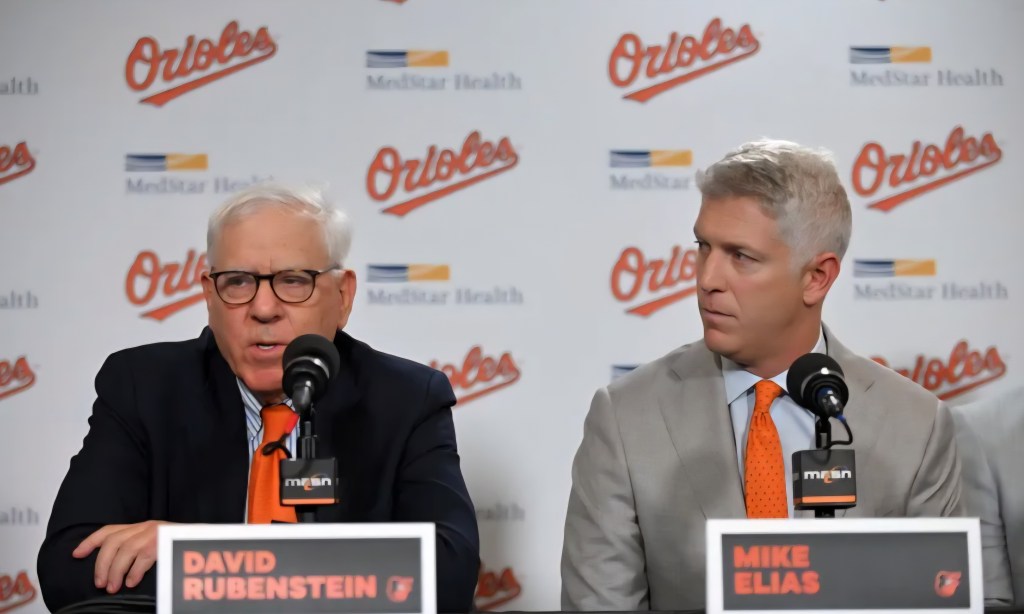
For Maryland Governor Wes Moore, the idea of losing the Preakness Stakes and the Baltimore Orioles would spell disaster for his administration. The hastiness to give in to nearly any demand put forth by John P. Angelos shows how desperate Moore’s administration is in making sure the Orioles remain in Baltimore.
Maryland is falling short with transparency or even soliciting ideas and feedback from people who live and work near the ballpark. In the end, the Angelos family seems to be dictating how Maryland should respond, leaving the fans and city out in the cold.
Coming out next week on the second part of this special edition of Around the Nest, I’ll bring you the thoughts of multiple local businesses surrounding the area of Oriole Park at Camden Yards.
What do you think of this situation? Let us know in the comments below! Make sure to follow The Baltimore Battery on Facebook, Twitter (X) and TikTok, and use the hashtag #baltimorebattery when sharing our content!
Represent The Baltimore Battery and show off your fandom with our official merchandise! Reasonably-priced attire made just for you! Visit our official shop site by clicking here!

Like Stephen’s content? Follow him on X – @SRJHeckman, and listen to the official podcast of The Baltimore Battery, The Final Strike, anywhere you get your podcasts!



 THE BALTIMORE BATTERY
Leave a comment